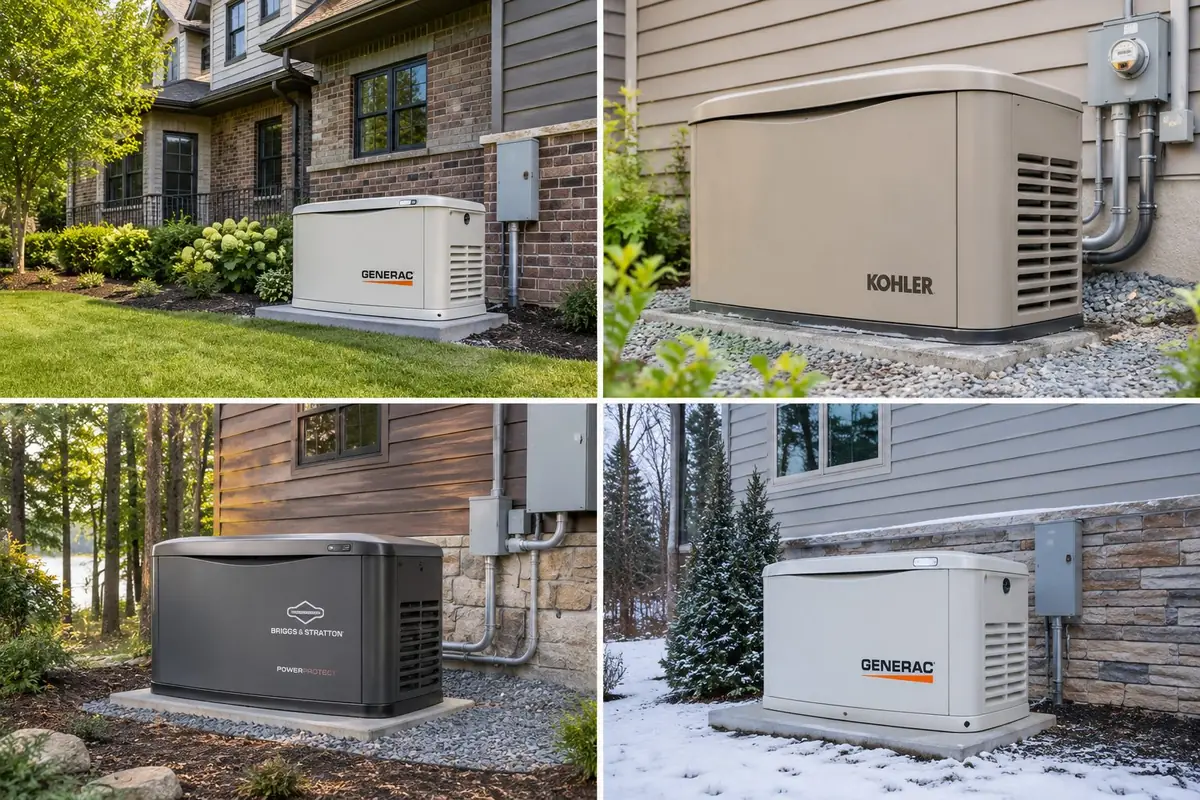
Residential Generator Services in Orillia
Planning backup power for your home? Get a Free Estimate
Not sure what you need? Take the 1-minute quiz
1-minute backup power quiz
Answer six quick questions about your home and what you want backup power to do. Tap an answer to move on. At the end, add your contact details to see your results, and an independent local contractor follows up with options that fit.
Power interruptions can affect much more than your lighting. Heating equipment, refrigerators, freezers, sump pumps, well pumps, internet connections and other household essentials may all depend on electricity. When an outage lasts longer than expected, having a properly planned backup generator can make a significant difference to your home's comfort and daily routine. Generator Installation Orillia helps homeowners connect with independent local contractors for generator installation and related services in Orillia, Ontario.
Whether you are considering a whole-home standby generator, researching a Generac system or looking into a transfer switch, the first step is understanding what your property needs. The contractor can discuss your electrical requirements, preferred fuel source, equipment location and expected backup capacity before preparing an estimate. We make it easier to start that conversation by collecting your request and passing it to an appropriate independent local contractor.
We focus on making it straightforward for homeowners to request generator services. We understand that arranging backup power can involve several decisions, including choosing the right equipment, considering natural gas or propane, understanding electrical requirements and determining which household circuits should remain available during an outage. Our role is to help you begin the process without making those decisions more complicated than they need to be.
Generator Installation Orillia does not perform the installation or repair work itself. We take your request and pass it to an independent local contractor. The contractor contacts you, discusses the property and your requirements, provides the estimate and completes the agreed work independently. This arrangement gives homeowners a starting point for discussing their project while keeping responsibility for the actual work with the contractor.
More about us
Explore generator installation and related services, including whole-home standby systems, Generac equipment, maintenance, transfer switches, propane generators and natural gas generator installations.
Connect with a contractor to discuss an automatic standby generator designed around your home's essential electrical requirements.
Learn more →Request a contractor consultation about selecting and installing a Generac home standby generator.
Learn more →Connect with a contractor about generator troubleshooting, routine maintenance and standby system servicing.
Learn more →Request a contractor consultation about safe generator connections using suitable transfer equipment.
Learn more →Explore propane-powered standby generator installation with an independent contractor familiar with residential backup systems.
Learn more →Connect with a contractor to discuss a natural gas standby generator and the property's available fuel supply.
Learn more →We help connect homeowners throughout Orillia and surrounding communities with independent contractors for generator-related projects. Properties in this part of Ontario can have very different electrical arrangements, building ages, heating systems and fuel availability. A generator plan that suits a newer subdivision may need adjustments for an older rural home or a waterfront property.
Our service-area coverage includes Barrie, Midhurst, Innisfil, Coldwater, Oro-Medonte, Midland, Ramara, Gravenhurst, Wasaga Beach, Collingwood, New Tecumseth, Bradford, Thornton, Georgina, Huntsville, Alliston, Angus, Essa, Tiny, Parry Sound and Severn. Tell us where the property is located so we can pass your request along for consideration.
See all service areas
You can submit your generator requirements without having to work out every technical detail first. We pass the information to an independent local contractor who can discuss the project with you.
From complete standby installations to maintenance and transfer switch projects, you can request help with different parts of a residential backup power system.
Homes around Orillia range from established residential properties to rural buildings and seasonal waterfront residences. The contractor can consider the characteristics of your particular property.
The independent contractor contacts you to clarify the requirements, discuss equipment and provide an estimate. You can ask questions about the proposed work before deciding how to proceed.
The contractor is responsible for the installation, repairs, maintenance and other work agreed upon. We provide the connection between your request and the contractor.
A residential generator installation starts with understanding how electricity is used in the house. Before selecting equipment, it helps to identify the appliances and systems that matter most during a power interruption. Some homeowners want to keep nearly every normal household function available. Others mainly want to protect their heating equipment, refrigerator, freezer, well pump, sump pump and a few essential outlets. These different priorities can lead to very different generator requirements.
The contractor will generally begin by discussing the property, its existing electrical service and the type of backup power you want. The electrical panel, service capacity, available installation space and fuel arrangements all influence the proposed setup. A property with an existing natural gas connection may have different options from a rural property that relies on propane or another fuel arrangement.
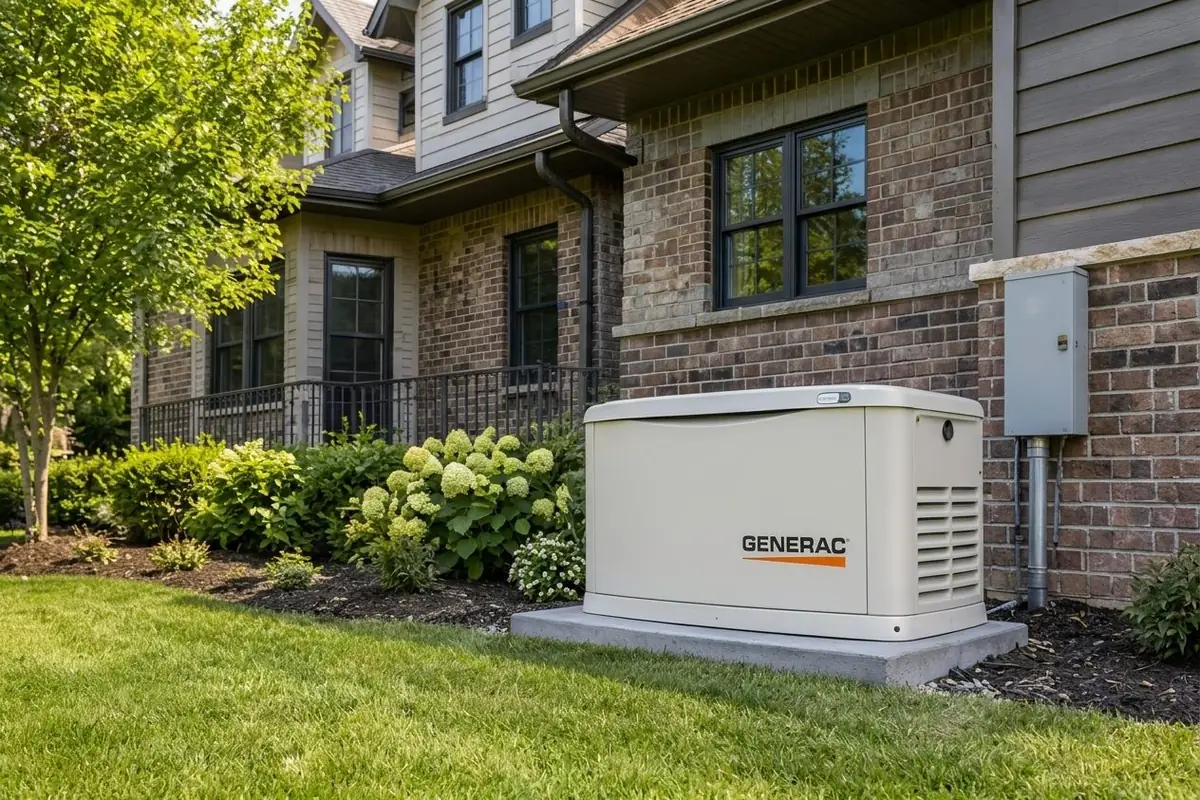
The generator also needs an appropriate outdoor location. The contractor considers manufacturer requirements, clearances, ventilation, access for maintenance, noise considerations and the relationship between the equipment and nearby buildings. Snow accumulation, drainage and landscaping can affect where a unit is best positioned. The installation must also account for the electrical equipment that safely connects the generator to the house.
A transfer switch or approved interconnection arrangement allows the backup source to supply the intended circuits without creating an unsafe connection to the utility system. The correct configuration depends on the electrical design and applicable requirements. The contractor determines which components are appropriate for the property and explains the proposed arrangement.
Once the equipment, fuel and electrical arrangements have been established, the contractor can explain the installation sequence, expected preparation and any required approvals. Testing is an important part of the process because the completed system needs to operate as intended. Understanding these stages before proceeding helps homeowners compare proposals based on the actual work involved rather than generator specifications alone.

One of the clearest reasons to consider a standby generator is repeated power interruption. If outages regularly interfere with heating, refrigeration, water supply or other essential functions, a permanent backup system may be worth investigating. Even when interruptions are relatively infrequent, the consequences can be inconvenient for households that depend on electrically powered equipment.
Homes with sump pumps deserve particular consideration. A power failure during heavy rain or snowmelt can leave a basement vulnerable if the pump cannot operate. Likewise, a home using an electric well pump may lose access to normal household water when utility power disappears. A backup generator can be planned around these needs, provided the equipment and electrical arrangement are suitable.
Heating systems are another important consideration in Ontario. A gas or propane furnace may still require electricity for controls, circulation and ignition. A homeowner may assume that having a non-electric heating fuel means the house will remain warm during an outage, but the electrical requirements of the heating equipment still matter. The contractor can review which components need backup power.
You may also want to investigate a generator if food storage is a concern, someone works from home, household members rely on powered equipment or the property is located outside a densely serviced neighbourhood. Seasonal cottages and waterfront residences can have additional requirements related to water systems, security and periods when the property is unattended.
There is no single sign that determines the right generator size. The important question is what happens when the electricity goes out and which systems you want to keep operating. Preparing a list of essential equipment before speaking with a contractor makes it easier to discuss a practical solution.
Generator capacity should be based on the electrical demands of the equipment you intend to operate. A larger generator is not automatically the best choice, just as a smaller unit is not necessarily adequate simply because it costs less to purchase. The objective is to match the generator and electrical arrangement to the household's actual requirements.
Start by separating essential loads from optional ones. Essential loads might include a furnace, refrigerator, freezer, sump pump, well pump, selected lighting and communication equipment. Optional loads could include additional kitchen appliances, workshop equipment, air conditioning or other high-demand devices. Some appliances draw considerably more power when starting than they do during normal operation, so starting requirements need to be considered as well.
Automatic standby generators offer convenience because an appropriately configured system can detect a utility outage and begin supplying backup power without the homeowner manually starting a portable unit. The transfer equipment changes the electrical supply arrangement safely. Depending on the design, selected circuits or a broader portion of the house can receive generator power.
Other decisions include the fuel type, enclosure, monitoring features, maintenance accessibility and the availability of replacement parts. Homeowners considering a Generac generator may want to compare models based on their electrical requirements and intended operation rather than selecting equipment based only on the brand name.
Ask the contractor to explain the generator's rated output, the expected loads, transfer equipment and any limitations. A clear explanation should make it understandable which household systems can operate together and whether some appliances need to be managed during an outage. This information is more useful than simply choosing the biggest unit that appears to fit the property.

Generator installation involves more than placing a machine outside and connecting a cable. The amount of work depends on the property, electrical system, equipment selected and fuel supply. Understanding these factors helps homeowners make sense of differences between installation proposals without relying on a generic price estimate.
Electrical panel conditions are an important consideration. An older panel, limited available space, existing wiring issues or a requirement for additional circuit arrangements can change the work involved. The contractor may need to review the service capacity and determine whether the proposed generator and transfer equipment are compatible with the existing electrical installation.
The distance between the generator and electrical equipment also matters. A longer cable route, difficult access or the need to prepare a suitable base can add work. Landscaping, paving, grading, underground services and restricted installation areas may require additional planning. Homes with narrow side yards or closely spaced neighbouring buildings can present different placement considerations from detached rural properties.
Fuel arrangements create another set of variables. Natural gas installations require an assessment of the available supply and the generator's fuel demand. Propane systems need appropriate storage and supply arrangements. The contractor can determine whether the existing setup is suitable or whether changes are necessary.
Other considerations include local approvals, inspection requirements, manufacturer installation instructions and the equipment's operating characteristics. Seasonal weather can influence scheduling and site preparation, especially where excavation or outdoor access is involved. A useful estimate should describe the equipment, installation scope, included electrical work, fuel-related work and any exclusions. Comparing these details gives homeowners a clearer understanding of what they are agreeing to.
A generator is an important electrical and mechanical system, so selecting the contractor deserves as much attention as selecting the equipment. Homeowners should look for a clear explanation of the proposed installation and an understanding of the requirements that apply to the property. The discussion should cover electrical safety, transfer equipment, generator placement, fuel supply and the manufacturer's instructions.
Ask who is responsible for each part of the project. Depending on the installation, the work may involve electrical connections, fuel piping, site preparation and equipment commissioning. It is important to understand which contractor or qualified trade professional handles each component and how coordination is managed. Ask what approvals and inspections are applicable and how these will be addressed.
A good project discussion should also cover future maintenance. Standby generators need periodic attention even if they operate automatically during outages. Ask about recommended service intervals, exercise operation, oil and filter requirements, battery condition and how to arrange service if the generator displays a fault. The contractor should be able to explain the maintenance responsibilities associated with the proposed equipment.
Before agreeing to work, review the written estimate. Confirm the generator model, rated capacity, transfer equipment, fuel arrangement, installation details and any additional work that may be required. Understand the payment terms, expected schedule, warranty information and responsibility for obtaining necessary approvals. Do not rely on assumptions about what is included.
Generator Installation Orillia helps make the initial connection. We take your request and pass it to an independent local contractor, who contacts you directly, discusses the project, provides an estimate and carries out the agreed work. This gives you a practical starting point for arranging a generator project while allowing the contractor to assess the specific property and explain the appropriate next steps.
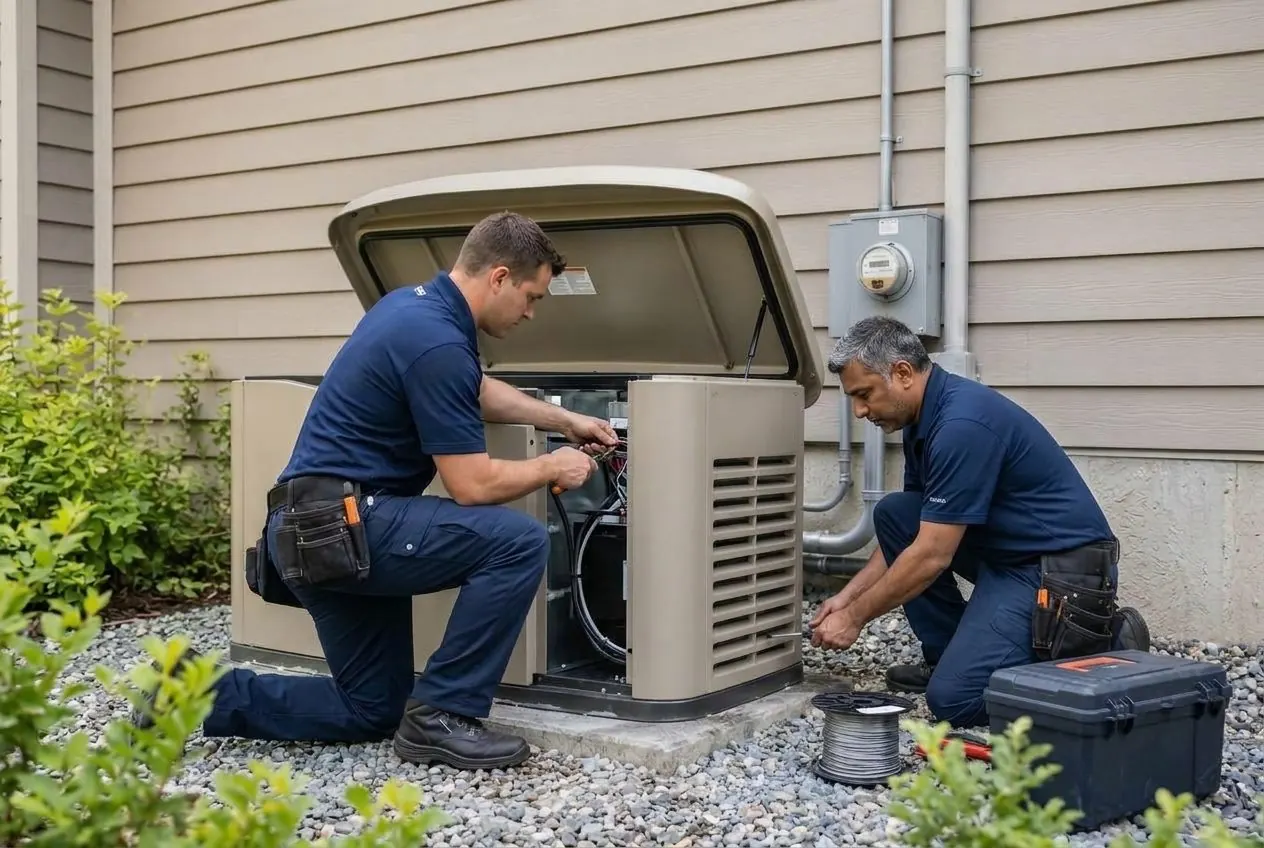
A permanently installed generator touches two regulated systems in your home. The wiring, transfer switch and any interlock are electrical work, which in Ontario is notified to the Electrical Safety Authority (ESA). A licensed electrical contractor normally files that notification, and the work can be inspected before it is closed out.
The fuel connection is the second part. Natural gas and propane lines to a generator are installed by certified gas technicians under the Technical Standards and Safety Authority (TSSA). The installation code sets clearances between the generator, the house, windows, vents and any propane tank.
Local rules can also apply. Some municipalities have setback or noise requirements for equipment in side and rear yards. For a home in the city, the City of Orillia can tell you what applies to your lot. Ask the contractor to explain which permits and notifications are included in the estimate.
A portable generator is the lower-commitment option. It sits in the garage or shed until it is needed, then gets wheeled outside, fuelled and connected. Connected safely through an inlet and a transfer switch or approved interlock, it can run a furnace blower, a fridge, a sump pump and some lights. The trade-off is that someone has to be home to set it up, and it needs fuel every few hours.
A standby generator is permanently installed outside the house. It starts on its own when the power goes out and switches back when utility power returns. It runs on natural gas or propane, so there is no refuelling during an outage. It suits households where someone may be away, where a well pump or sump pump must keep running, or where a family member relies on powered medical equipment.
Both options need a safe connection to the house. Running a portable generator through a cord plugged into an outlet is dangerous to you and to utility line workers. The contractor can explain which setup fits your home and how you plan to use it.
Orillia sits between Lake Simcoe and Lake Couchiching, and winter storms, freezing rain and heavy snow can bring down lines across the area. A winter outage is when a backup system matters most, because heat, water and frozen pipes become the main concerns.
If you heat with natural gas or propane, the furnace still needs electricity for its blower, controls and igniter. A generator sized to run the furnace keeps the house warm even if the rest of the panel is left off. Homes on a private well also need the well pump covered, and that pump can draw a large amount of power when it starts.
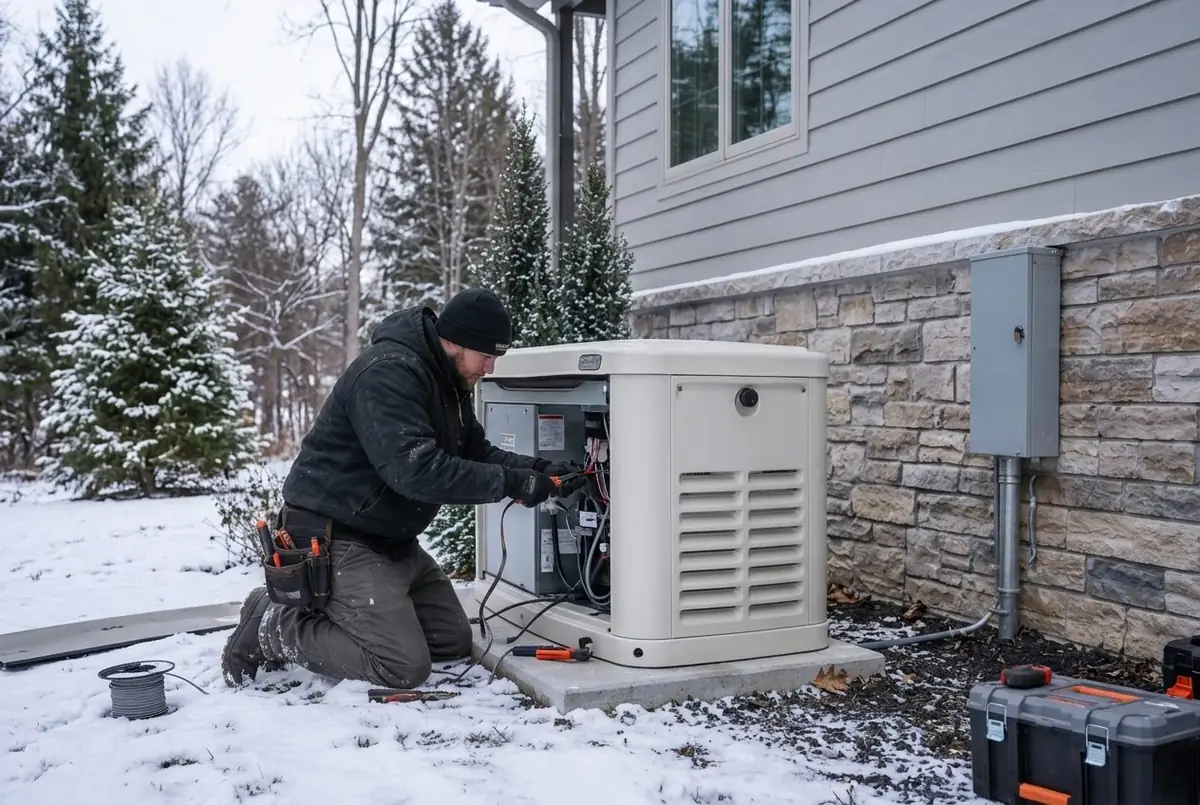
Think about access too. The generator needs to be reachable after a snowfall for service, and the exhaust must stay clear of drifts. The contractor can suggest a location that works in February as well as in July.
Natural gas is the usual choice for homes in town that already have a gas meter. It is delivered by pipe, so the generator can run as long as the outage lasts. The contractor will check whether the meter and line have enough capacity for the extra load.
Propane suits many rural, cottage and waterfront properties around Orillia that are not on a gas line. The generator runs from a tank on the property, and the tank size decides how long it can run. If you already have propane for heating, the supplier can confirm whether the tank can carry the generator too.
Portable generators usually run on gasoline, and some models can also run on propane. Whatever the fuel, it should be stored safely and the unit should never run indoors or in an attached garage.
Most standby installations follow the same order. First the site is prepared. A level base or pad is set in the spot the contractor chose, with the clearances from windows, doors, vents and the property line that the installation code and the manufacturer require. Then the generator is set on the pad.
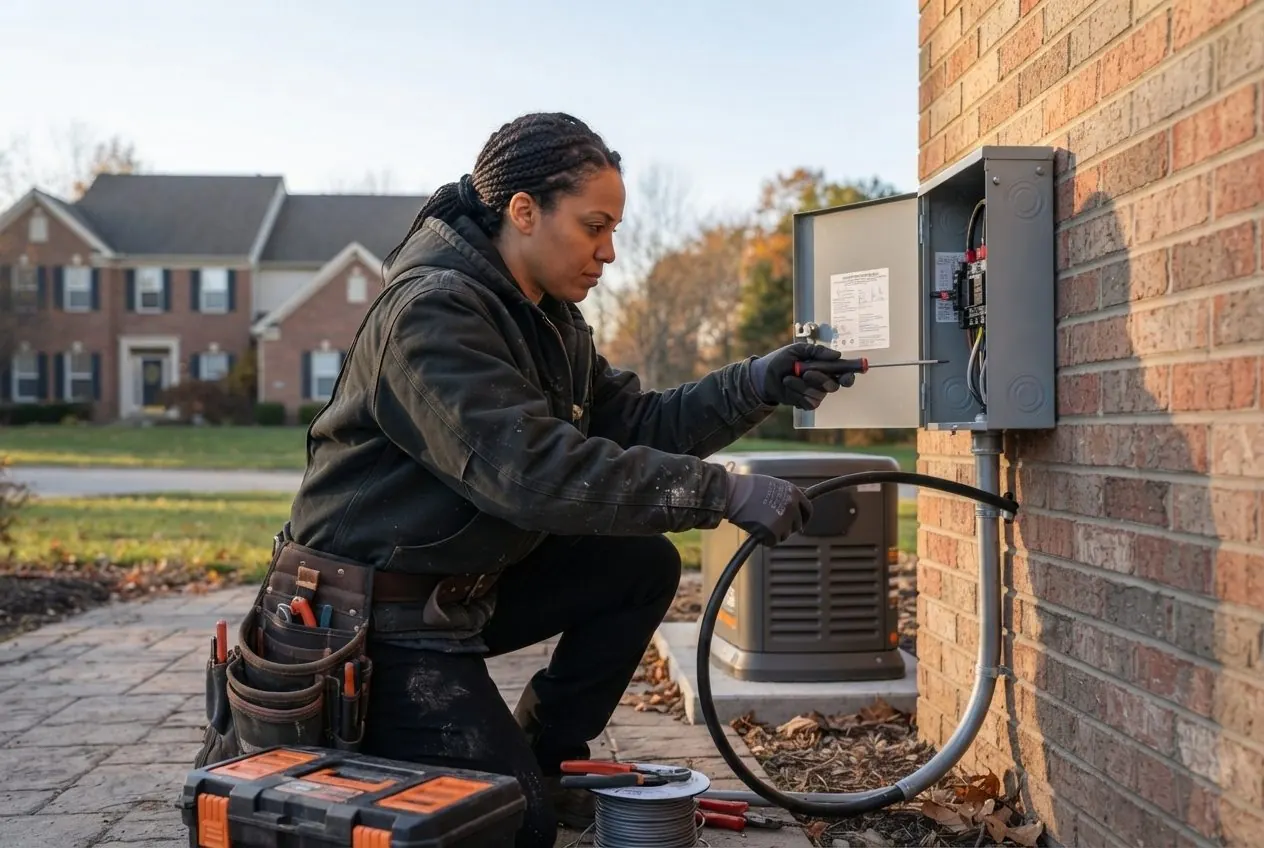
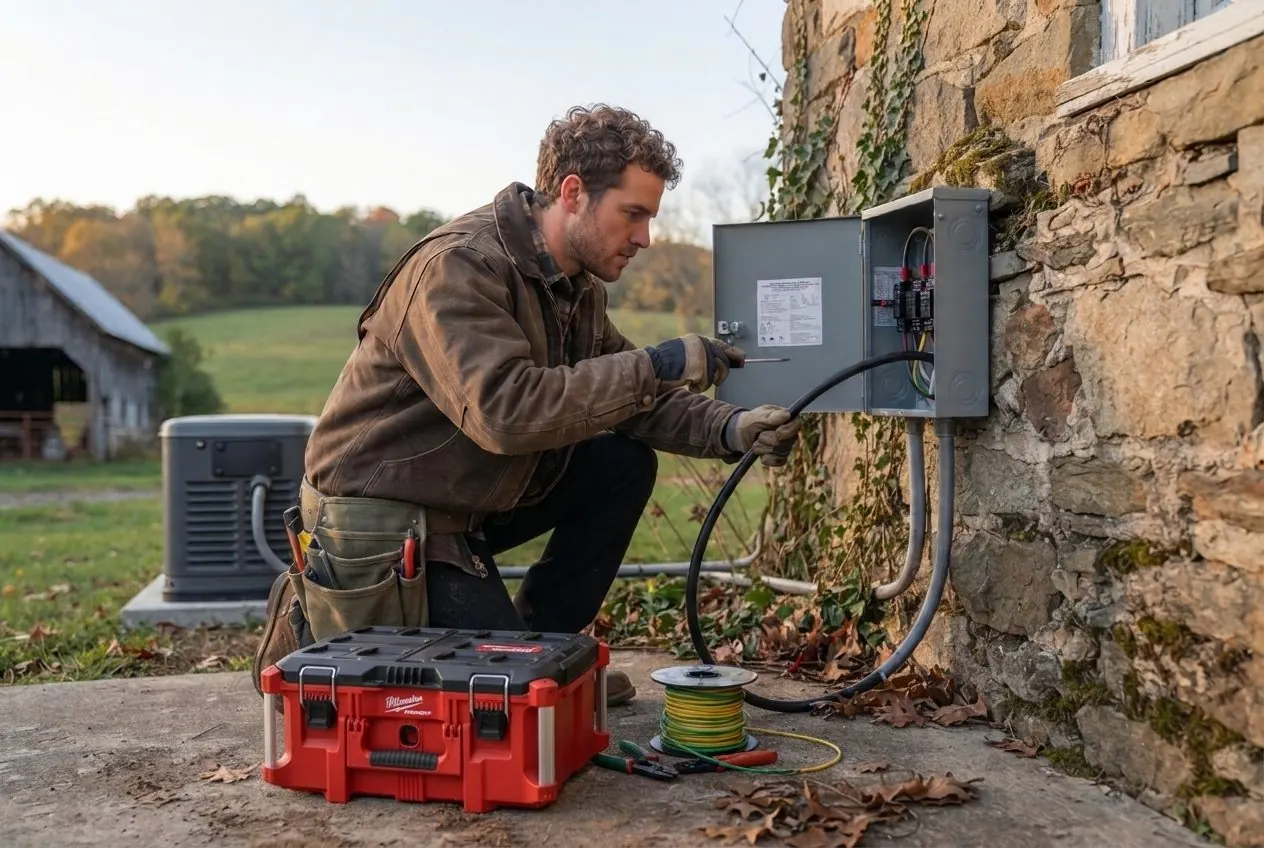
Next come the two connections. A licensed electrician installs the transfer switch beside the main panel and runs the wiring out to the generator. A certified gas technician runs the natural gas or propane line from the meter or tank to the unit. In Ontario, the electrical work is notified to the Electrical Safety Authority and the fuel work follows TSSA rules, so inspections may be part of the schedule.
Finally the system is started and tested. The installer runs the generator, switches the house over to backup power and back again, and checks that the circuits you chose are covered. Before they leave, ask them to show you the controls, the exercise schedule and what the warning lights mean. Many installations take one to two days on site, though permits, gas meter changes and equipment delivery can add time before work starts.
A standby generator is built to sit outside for years and start when it is needed, but it does need some care. Most units run a short self-test on a schedule, often weekly, to keep the engine ready. You will hear it run for a few minutes. If it stops self-testing or shows a warning light, call for service rather than waiting for the next outage.
Routine maintenance usually means an oil and filter change, spark plugs, an air filter and a battery check, on the schedule in the owner's manual. Units that run through long outages may need service sooner, so keep a note of long run times. Annual service in Ontario typically costs a few hundred dollars, as the cost table below shows.
Keep the space around the unit clear. Snow, leaves, garden furniture and firewood should stay out of the clearance zone so the generator can breathe and a technician can reach it. After a heavy snowfall, clear a path to the unit and make sure the exhaust and air intake are not buried.
Orillia sits at the gateway to cottage country, and many people who live here also own a cottage or a seasonal property farther north or along Lake Simcoe and Georgian Bay. Backing up a cottage is a different job from backing up a house. The main concern is usually protecting the property while nobody is there, rather than comfort during an outage.
For a cottage that stays heated through winter, the loads that matter most are the heat, the sump pump, the well pump, any heat tape on water lines and, where it exists, a UV water treatment system. A standby unit on propane is the usual choice, since many cottages are not on natural gas. Remote monitoring lets you see on your phone when the generator starts, stops or needs service.
Access matters too. Propane trucks and technicians need to reach the property in every season, and water-access or seasonal-road cottages need extra planning for delivery and fuel. If you are asking about a cottage, say so in your request and describe how the property is reached, so the contractor can plan for it.
Every fuel-burning generator produces carbon monoxide, a gas you cannot see or smell. A portable generator should never run inside a home, garage, basement or shed, even with the door open, and it should sit well away from windows and doors. Ontario requires working carbon monoxide alarms in homes with fuel-burning appliances or an attached garage, so test yours before storm season.
Never connect a generator by plugging it into a household outlet. That sends power back through the home's wiring and onto the utility lines, which can injure line workers and damage your equipment when power returns. A transfer switch or an approved interlock with an outdoor inlet is the safe way to connect, and in Ontario that work is notified to the Electrical Safety Authority.
Here is what generator work typically costs in Ontario, so you can plan before you talk to a contractor. Each service page has more detail on what affects the price.
| Item | Typical range |
|---|---|
| Standby generator, essential circuits | $8,000 to $15,000 |
| Standby generator, typical whole home | $14,000 to $22,000 |
| Interlock kit or transfer switch for a portable generator | $400 to $1,500 |
| Natural gas line from the meter | $1,200 to $2,200 |
| New propane tank, owned | $1,500 to $4,000 or more |
| Annual generator maintenance | $200 to $450 |
| ESA permit and inspection | $100 to $600, depending on the job |
The main things that move a price are the size of the generator, the distance to the electrical panel and the fuel supply, whether the panel or gas meter needs an upgrade, and the work needed to prepare the spot where the unit sits.
These are typical installed ranges in Canadian dollars, before HST, drawn from price guides published by Ontario installers in 2025 and 2026. They are a planning guide, not a quote. The independent contractor sets the actual price after looking at your home. Ranges last reviewed November 2026.
Generator Installation Orillia does not do the generator installation work itself. When you call or send the form, we pass your request to an independent local contractor who covers your part of Orillia, ON. That contractor contacts you, gives you the estimate and does the work.
See what happens after you callThe appropriate capacity depends on which appliances and household systems you want to operate during an outage. The contractor can review your electrical requirements and starting loads before recommending suitable equipment.
A whole-home arrangement may be possible depending on the electrical demand, generator capacity and existing service. The contractor can assess whether the proposed equipment can support your intended household loads.
An appropriately installed automatic standby system can detect a utility interruption and start supplying backup power through its transfer equipment. The exact operation depends on the equipment and installation configuration.
Yes, a generator system can be planned around a well pump if its electrical requirements are accounted for. Starting demand, pump controls and the other household loads need to be considered together.
Both fuels can be suitable, depending on availability, supply capacity, property conditions and generator compatibility. The contractor can review the advantages and installation requirements of each option.

Start with a description of your home and backup power needs. We will pass your request to an independent contractor for follow-up.
Free — no obligations
Not sure what you need? Take the 1-minute quiz