Safe Generator Electrical Connections
Discuss the right generator connection for your electrical panel. Get a Free Estimate
A generator needs a safe method of supplying electricity to household circuits. Transfer switches and approved interlock arrangements are designed to manage the relationship between utility power and a backup generator. Their purpose is to prevent unsafe simultaneous connections and allow electricity to reach the circuits intended for backup operation.
The correct setup depends on the existing electrical panel, service arrangement, generator and intended household loads. We pass your request to an independent local contractor who can review the installation requirements, explain the appropriate equipment, provide an estimate and complete the agreed work.
Plugging a generator into a household outlet with a double-ended cord sends power backward through the panel. It can energize the utility lines outside the house and put line workers at risk. It can also damage the generator and the home's wiring when utility power returns. A transfer switch or an approved interlock exists to prevent exactly that.
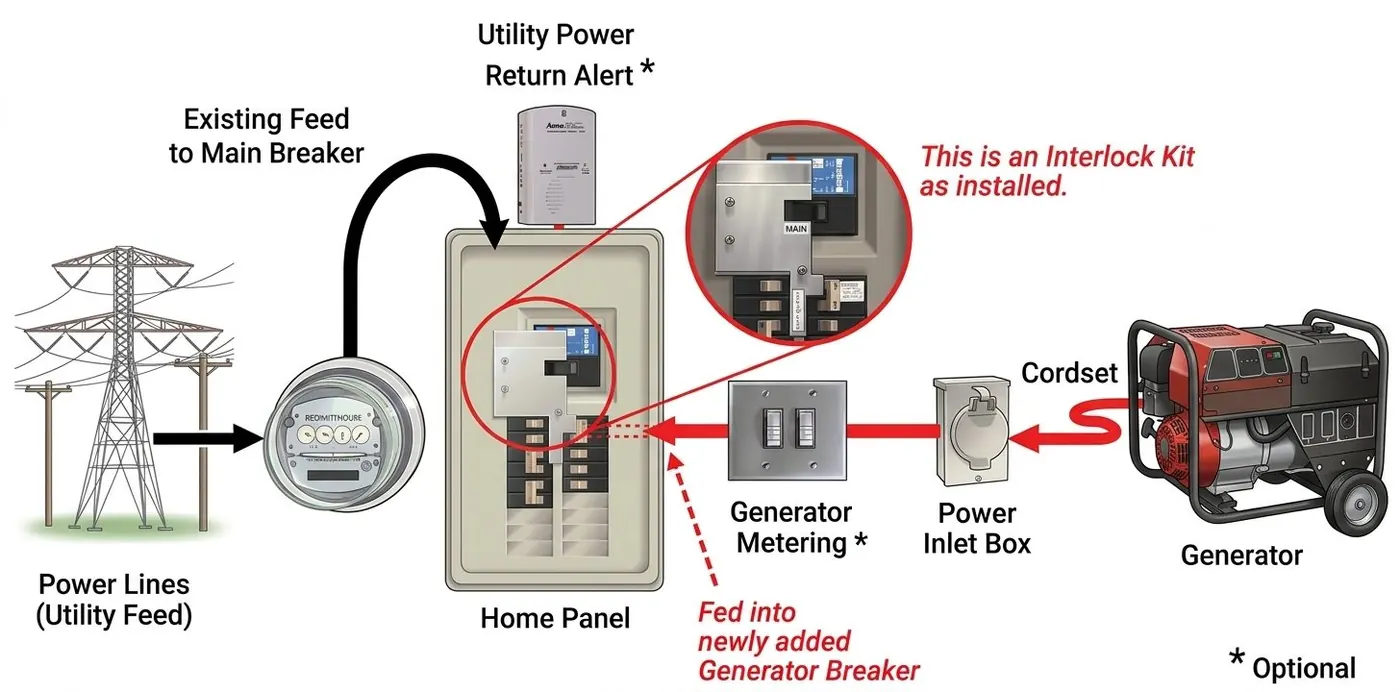
Interlock kits are specific to the make and model of the electrical panel. A kit that fits one panel may not be approved for another, so the contractor will check the panel label before recommending one. A properly installed inlet box outside the house then lets a portable generator connect through a single cord.
In Ontario, installing a transfer switch, interlock or inlet is electrical work notified to the Electrical Safety Authority. The contractor files the notification and the work can be inspected. If the generator runs on natural gas or propane, the fuel connection is a separate job for a gas technician certified under TSSA rules.

Different electrical configurations serve different properties. The contractor determines which arrangement is suitable and compliant.
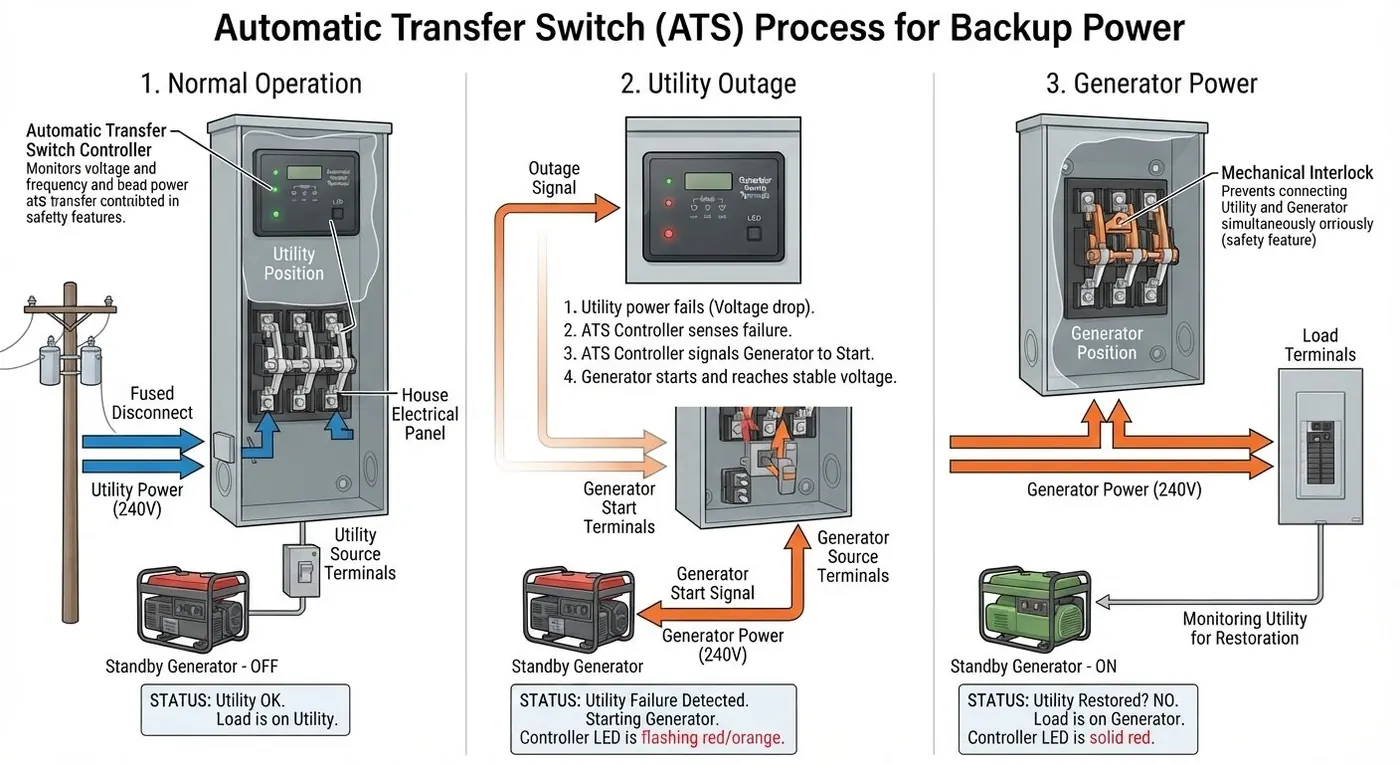
An automatic transfer switch can coordinate the change between utility electricity and standby generator supply when used with compatible equipment.
A manual transfer arrangement allows the homeowner to change the electrical supply source using the installed switching equipment according to its operating instructions.
A compatible interlock arrangement mechanically prevents conflicting breaker positions when configured as part of an approved generator connection.
The selected arrangement must account for panel compatibility, generator capacity and the circuits intended to receive backup electricity.
The contractor can assess your existing panel and generator arrangement before determining which transfer equipment is appropriate.
The request can cover the intended backup circuits and the equipment needed to prevent unsafe power connections.
We pass the information along so the contractor can discuss the work and prepare an estimate.

Tell us about your generator and electrical panel. We will forward your request to an independent contractor.
Free — no obligations
Not sure what you need? Take the 1-minute quiz
Tell us whether you already own a generator or are planning a new backup power installation.
Provide details about the electrical panel and the circuits you want to keep available.
The contractor assesses compatibility and discusses the transfer arrangement and required work.
The contractor performs the agreed installation and verifies the equipment's operation and applicable safety requirements.

Connecting a portable generator safely is one of the lower-cost backup power projects. The price depends mostly on the panel, where the inlet box goes and how much wiring is needed between them.
| Item | Typical range |
|---|---|
| Interlock kit, supplied and installed | $400 to $800 |
| Interlock with outdoor inlet box and wiring | $500 to $1,500 |
| Portable generator setup with transfer switch and inlet, including ESA permit | $700 to $1,500 |
| ESA permit for this type of work | $100 to $350 |
An automatic transfer switch for a permanently installed standby generator is normally priced as part of the standby installation rather than on its own. If your panel is full, very old or not compatible with an approved interlock, the contractor may suggest a manual transfer switch or a panel change instead, which raises the cost.
These are typical installed ranges in Canadian dollars, before HST, drawn from price guides published by Ontario installers in 2025 and 2026. They are a planning guide, not a quote. The independent contractor sets the actual price after looking at your home. Ranges last reviewed November 2026.
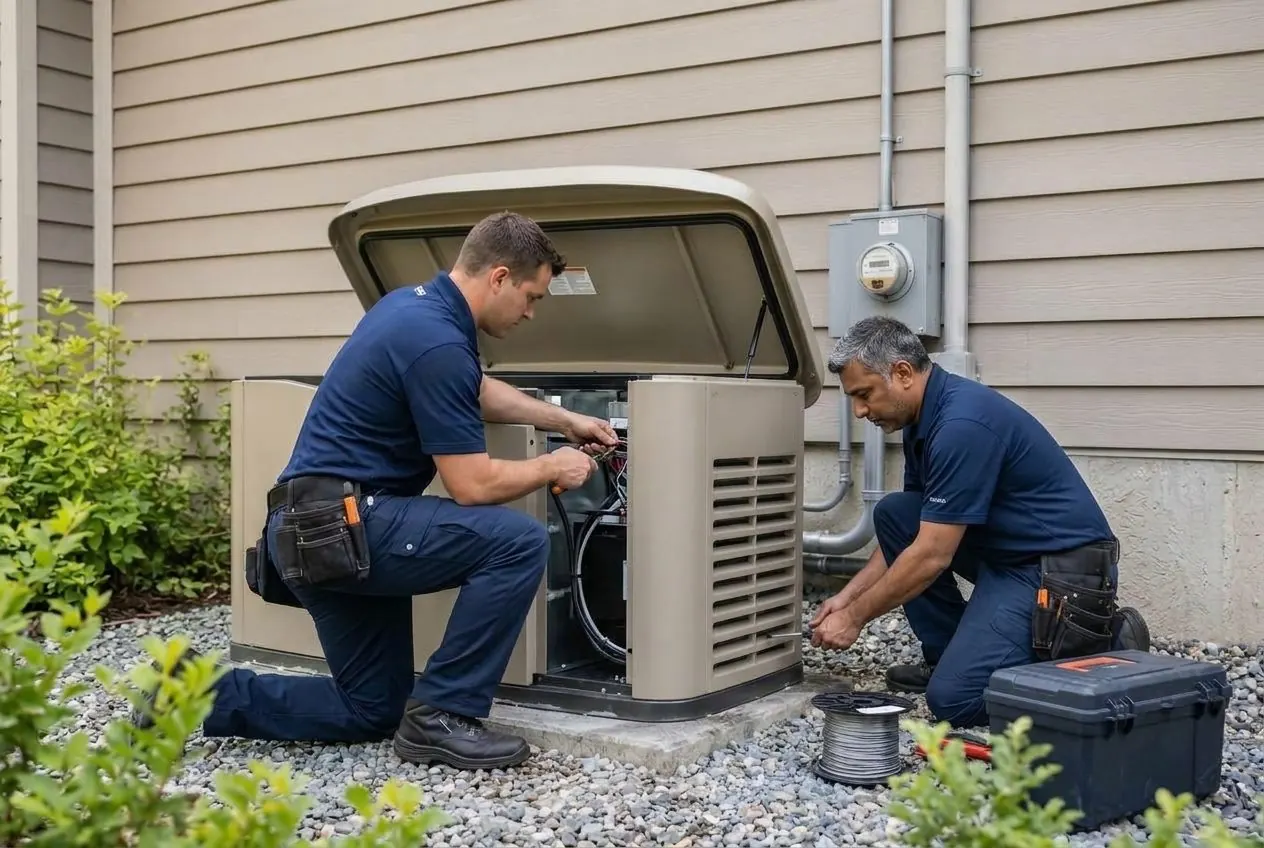
A standby generator requires suitable transfer equipment to connect safely to the electrical system. The contractor can determine the appropriate configuration for the installation.
No. The panel and breaker arrangement must be compatible with an approved interlock configuration. The contractor needs to inspect the existing equipment before confirming suitability.
A manual transfer switch requires a person to operate the switching arrangement. An automatic transfer switch coordinates the change of supply when connected to compatible standby equipment.
Yes. Some configurations are designed around selected essential circuits rather than the entire electrical service. The contractor can help determine which circuits make sense for your household.